
Five Simple Autumn Mindfulness Practices for Children, Teens & Families (Free Pack)
Breathing, mindfulness and nature practices for seasonal change, for you and the children, teens and families you support, with HERE's free autumn pack and playlist.
Jen and Dana, HERE co-founders · · 4 min read
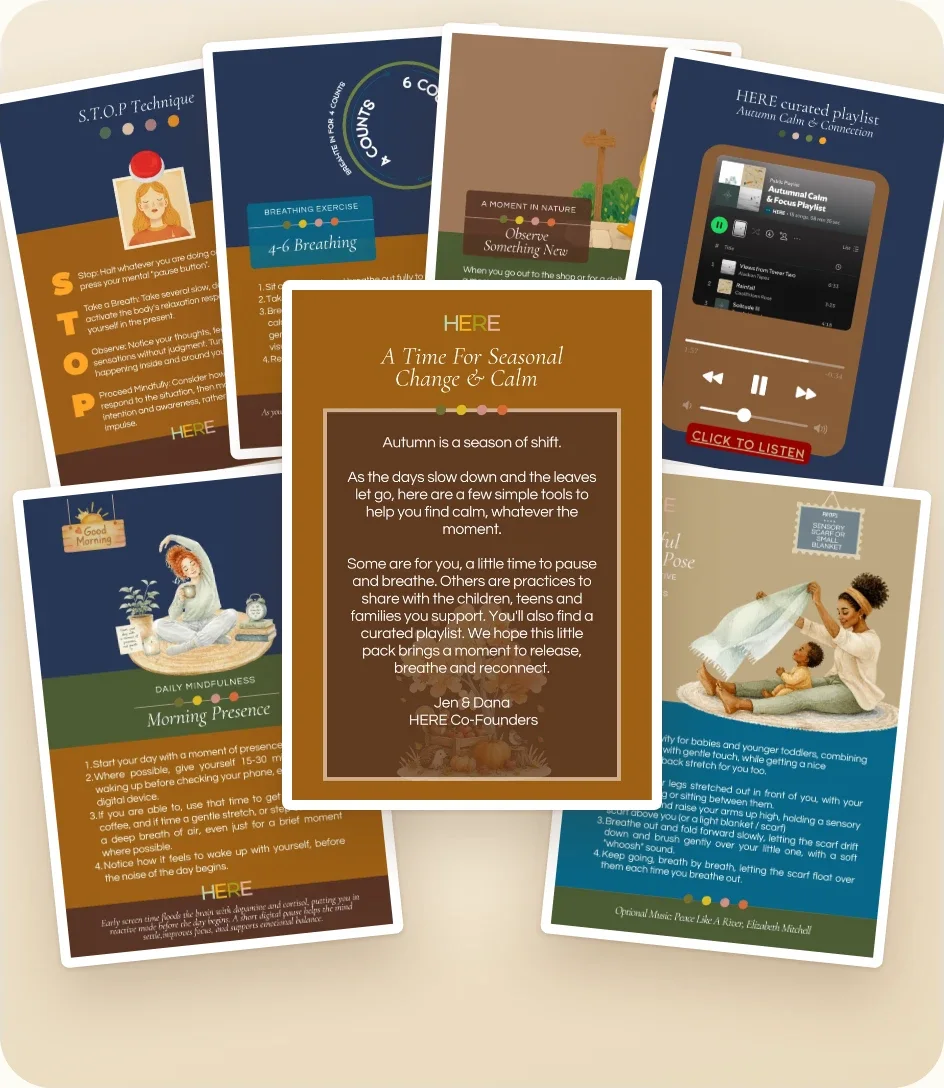
Autumn is a season of shift. As the days slow down and the leaves let go, routines change too: new terms, darker mornings, cooler air and a different pace to the week. It is a natural moment to pause.
We gathered a few simple tools to help you find calm, whatever the moment. Some are for you, a little time to pause and breathe. Others are practices to share with the children, teens and families you support. We hope they bring a moment to release, breathe and reconnect.
What's inside the pack
4-6 Breathing
A breathing exercise with a longer out-breath, which helps gently calm the nervous system. It works for adults, teens and children, and needs nothing but a quiet minute.
- Sit comfortably and breathe out fully to prepare.
- Take a slow, deep breath in through your nose for a count of 4.
- Breathe out slowly through your nose or mouth for a calm count of 6. It can help to picture the breath as a complete circle.
- Repeat three to five times, or as many times as you need.
As you breathe in, say the word "let" in your mind, and as you breathe out, "go". It adds a feeling of release in a moment of need.
Peaceful River Pose
A calming, connective movement for babies and younger toddlers and the grown up with them. It pairs slow breathing with gentle touch, and gives you a good hamstring and back stretch too. You need a sensory scarf, or a light blanket or scarf.
- Sit with your legs stretched out in front of you, with your little one lying or sitting between them.
- Breathe in and raise your arms up high, holding the scarf above you.
- Breathe out and fold forward slowly, letting the scarf drift down and brush gently over your little one, with a soft "whoosh".
- Keep going, breath by breath, letting the scarf float over them each time you breathe out.
Observe Something New
A moment in nature for a walk to the shop or a daily stroll. Take a moment to really look around you, and up too. Try to notice something you might not have seen before: a tree, the shape of a building, a small detail along the way. A slightly different route helps.
Tune into the signs of autumn, the changing leaves, the cooler air, the shorter days, and listen to the sounds around you. This simple practice supports mindfulness and helps you stay present and appreciate the small things.
To reflect on afterwards, alone or together: what is one thing you noticed today that you had never spotted before? How did it feel to slow down and really look?
Morning Presence
Start the day with a moment of presence, before the phone, emails and the noise of the day begin. A short digital pause helps the mind settle and supports focus and emotional balance.
- Where possible, give yourself 15 to 30 minutes after waking before checking your phone, emails or any device.
- Use that time to get ready, have a coffee, stretch gently, or step outside for a deep breath of air, even briefly.
- Notice how it feels to wake up with yourself first.
The S.T.O.P. Technique
For a moment that feels like too much, at work, at home or in a classroom. It is easy to remember and easy to teach.
- Stop: halt whatever you are doing or thinking and press your mental pause button.
- Take a breath: a few slow, deep breaths to ground yourself in the present.
- Observe: notice your thoughts, feelings and physical sensations without judgement, inside and around you.
- Proceed mindfully: consider how you want to respond, then move forward with intention rather than on impulse.
Autumn Calm and Connection
HERE's curated playlist for the season, to play during a quiet moment, a car journey or a calm corner.
Listen to the playlist on Spotify
Who it is for
Everyone who supports children, teens and families: educators, counsellors, family hub teams, youth workers and mental health professionals, and parents and carers at home. The practices suit a classroom, a group session, a home visit or a quiet five minutes for yourself.
Find more like this
Every practice here sits within HERE's reviewed activity library, organised by age, feeling, setting and time. If you are looking for something for a particular moment, describe it to Noa and Noa will suggest activities from the library.